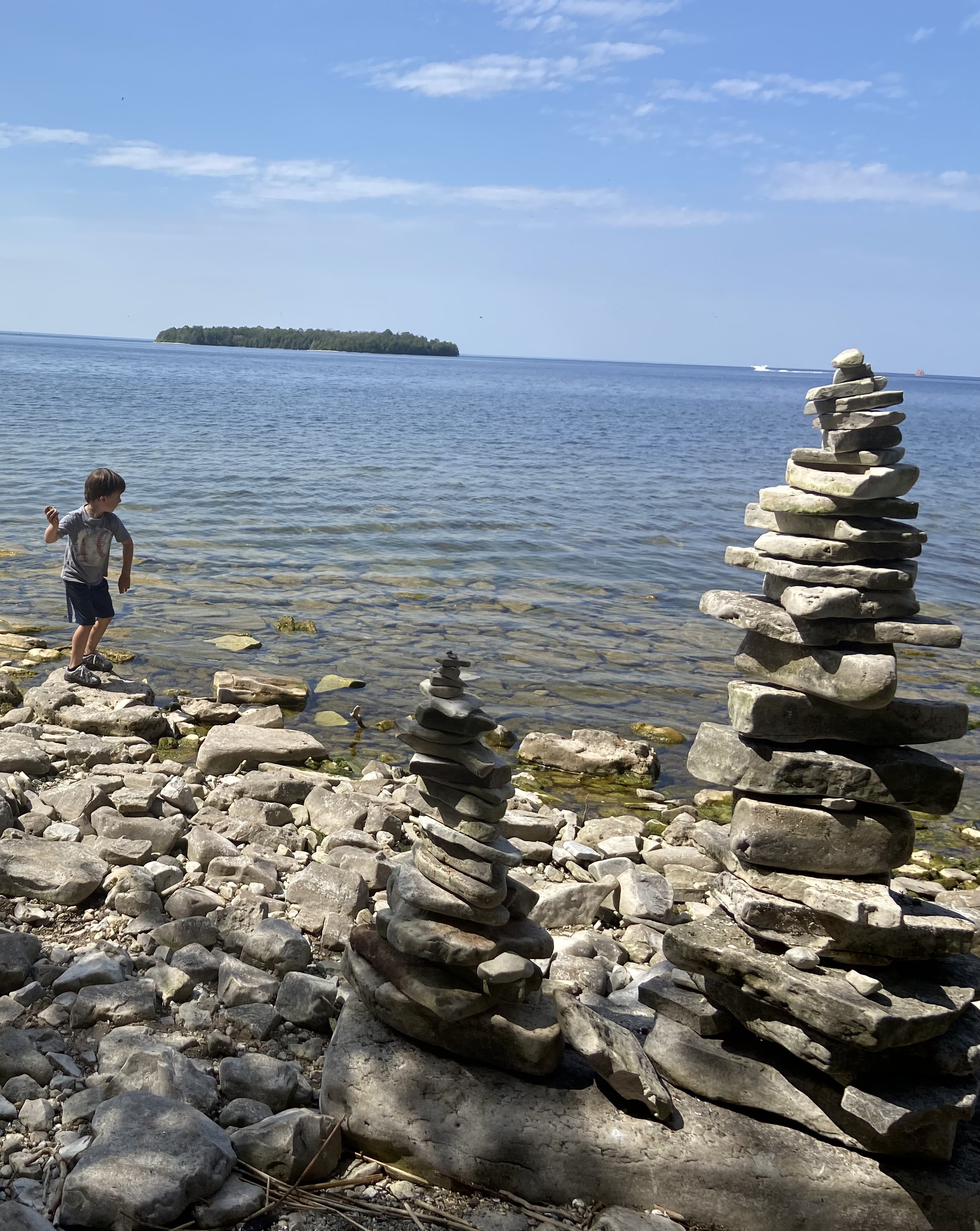
This is a strange superstition for creatures who learned to speak without grammar worksheets, who learned to walk without a syllabus, who learned the world by touching it, tasting it, breaking it, and asking why it broke.
When we restrict education to a designated space, we do more than limit our options. We subtly teach a doctrine: that the rest of life is “not-learning.” The kitchen becomes merely functional, the yard becomes merely recreational, the grocery store becomes merely transactional, the car becomes merely transportation. Children absorb this partitioning early. They learn to locate curiosity inside a narrow box, and to shut it off the moment they leave the box.
The Geography of Learning
We should not be surprised that school, as a place, produces schooling as a mentality. A mentality that asks, “Is this going to be on the test?” A mentality that searches for the minimum required, because the environment itself has taught them that learning is a contained activity with a contained purpose.
And then – after years of practice – many children become incapable of imagining education outside the institutional space. They may even be suspicious of it. “Real learning happens at school,” they assume, and everything else is merely life, to be survived between assignments.
But the world does not cooperate with this assumption. Reality is not arranged into forty-five minute blocks. Truth does not only show up when the lesson plan says it will. Wisdom does not wait in a curriculum binder.
The antidote is not to create a second schoolhouse in the home, complete with desks and “classroom rules,” as if the error was merely one of funding or location. The antidote is to recover the older, more human vision: that learning is not a room; learning is a way of being in the world.
Ubiquity as Liberation
Ubiquity means that teaching and learning are not confined to a special place. The goal is not to add “field trips” to an otherwise segregated program, but to treat the whole field as the trip.
This does not mean that every moment becomes a lecture, or that every outing must be pedagogized into exhaustion. It means something gentler and far more potent: that we recognize the inherent instructiveness of life, and we step into it with open eyes.
The kitchen is chemistry and economy and patience. The yard is biology and stewardship and weather. The bathroom is routine and cleanliness and the strange miracle of plumbing. The grocery store is mathematics and nutrition and marketing and self-control. The street is civics and risk assessment and neighborliness. A broken appliance is physics and problem-solving and humility. A wounded friendship is ethics and reconciliation and the slow work of forgiveness.
None of this requires a textbook to be real. In fact, the textbook often arrives after the reality, as a map arrives after the terrain. The map is helpful – but only if we remember it is a representation, not the thing itself.
The Hidden Cost of “Learning Spaces”
Our culture prizes “learning spaces”: dedicated rooms with dedicated tools, as though education depends primarily on the correct furniture. But the human heart does not learn best because the chair is ergonomic. It learns best because the world is meaningful.
When learning is made ubiquitous, two things happen.
First, children begin to sense that the world is intelligible. They discover that everything is connected, that knowledge is not a series of isolated subjects but a woven fabric. The categories of “math,” “science,” “history,” and “language” start to look like filing cabinets we invented for convenience, not walls God erected in creation.
Second, children stop waiting for permission to learn. Curiosity becomes normal again. Questions arise naturally, not as “class participation,” but as the mind’s healthy reflex in the presence of reality.
Practicing Ubiquity
Ubiquity is not a program you implement. It is a posture you cultivate.
Refuse to quarantine curiosity. When a child asks “why,” do not instinctively postpone the question to the next “school time,” as if wonder must make an appointment.
Treat ordinary life as worthy of attention. The mundane is full of lessons, but only to the person who is actually looking.
Let places teach what they are best suited to teach. Don’t force the forest to become a classroom; let it be a forest. The lesson comes through contact, not control.
Prefer participation to presentation. Many truths are learned with hands before they are learned with words. Invite children to do real work, and learning will attach itself to the work like fruit to a branch.
None of this requires grand ambition. It requires faithfulness: a willingness to see the educational potential already present in the spaces you inhabit every day.
A World Revitalized
The institutional model shrinks learning into a building. Ubiquity restores learning to its rightful size: as wide as the world.
This is not anti-intellectual; it is profoundly intellectual, because it insists that knowledge is for life, and that life is saturated with knowledge. It is also deeply humane, because it does not ask children to live in two disconnected realms – school and not-school – but invites them into a single integrated existence where truth is sought everywhere.
Learn in the kitchen. Learn in the car. Learn on the sidewalk. Learn under the sink while fixing the leak. Learn in the awkward silence after an argument. Learn when the bread burns. Learn when the baby laughs. Learn when the dog dies. Learn when the stars come out.
No location should be off limits for learning, because no location is off limits for life.