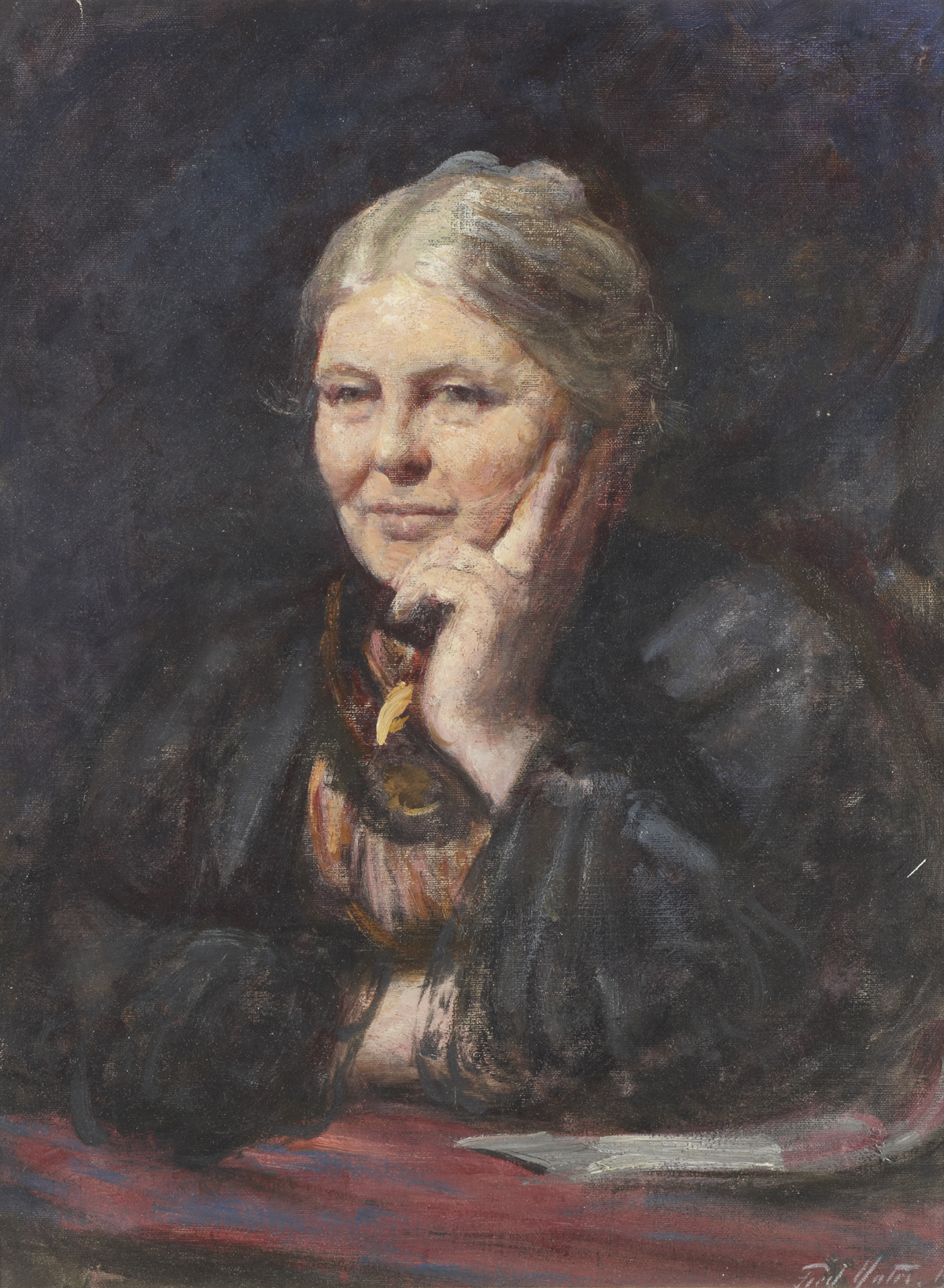
A Humane Vision of Education
Charlotte Mason’s final volume stands as her most comprehensive work, synthesizing decades of educational practice into a coherent philosophy. Writing in the early 20th century, Mason challenges the mechanistic, factory-model approach to education that dominated her era – and, unfortunately, still dominates ours.
At the heart of her philosophy is a simple but radical claim: children are born persons. This isn’t sentimental rhetoric. Mason means that children possess full human dignity from birth, capable of engaging with ideas, beauty, and truth in ways that most educational systems vastly underestimate.
The Trilogy: Atmosphere, Discipline, and Life
Mason’s educational method rests on three instruments:
“Education is an atmosphere, a discipline, a life.”
Atmosphere refers to the environment in which children grow – not contrived “educational environments,” but the natural atmosphere of home life where ideas are discussed, books lie open, and adults model curiosity and engagement.
Discipline means the formation of good habits. Mason dedicates significant attention to habit training, understanding that character is built through consistent, daily practice rather than through lectures about virtue.
Life points to her insistence that education must engage with living ideas through living books, not the pre-digested pabulum of typical textbooks.
Living Books vs. Twaddle
Perhaps Mason’s most enduring contribution is her passionate advocacy for living books – works written by authors who care deeply about their subjects and write with literary skill. She contrasts these with what she calls “twaddle”: the dumbed-down, condescending content typically served to children.
“We owe it to children to let them dig their knowledge, of whatever subject, for themselves out of the ‘fit’ book; and this for two reasons: What a child digs for is his own possession; what is poured into his ear, like the idle song of a pleasant singer, floats out as lightly as it came in, and is rarely assimilated.”
Mason’s curriculum included Shakespeare, Plutarch’s Lives, quality poetry, and substantial works of history and science – not because she was trying to create prodigies, but because she believed children deserved to encounter the best humanity has produced.
Narration: Knowledge That Sticks
Mason’s method of narration – having children retell what they’ve learned in their own words after a single, attentive reading – is brilliant in its simplicity. No worksheets, no multiple-choice tests, no endless review. If a child has truly engaged with material, they can reproduce it naturally.
This approach respects children’s minds. It assumes they’re capable of focused attention and genuine understanding rather than requiring constant repetition and drilling. Modern research on retrieval practice has only confirmed what Mason knew intuitively: active recall strengthens learning far more effectively than passive review.
Short Lessons and Varied Subjects
Mason advocated for short lessons – 20 minutes or less for younger children – covering multiple subjects each day. This runs counter to the modern trend toward extended “block scheduling” and deep dives into single subjects.
Her reasoning was psychological: attention flags after sustained focus on one topic. By switching subjects frequently, children’s minds stay fresh and engaged. Each lesson demands full attention precisely because children know it will be brief. No daydreaming allowed when you’ll be asked to narrate in fifteen minutes.
Nature Study and Direct Observation
Mason insisted on regular time outdoors for nature study. This wasn’t casual recess but deliberate observation – sketching leaves, watching birds, learning to see with attention and precision. She understood that direct encounter with reality develops observational skills and fosters genuine scientific thinking in ways that textbook descriptions never can.
Her nature journals, filled with careful sketches and observations, cultivated both artistic skill and scientific accuracy. Children learned to look closely, to notice, to wonder – habits of mind that transfer to every domain of learning.
A Generous Curriculum
Mason’s curriculum was remarkably generous and broad. In an era increasingly obsessed with “basics” and measurable outcomes, she insisted that children deserved exposure to art, music, poetry, handicrafts, foreign languages, and much more – not as enrichment for the gifted, but as the birthright of every child.
“The question is not, – how much does the youth know? when he has finished his education – but how much does he care? and about how many orders of things does he care?”
This question cuts to the heart of what education should accomplish. Knowledge that doesn’t spark caring, that doesn’t open up new worlds of interest and engagement, is knowledge that will be promptly forgotten.
Enduring Relevance
Despite being over a century old, Mason’s work speaks powerfully to contemporary concerns. In an age of standardized testing, teaching to the test, and narrowed curricula focused obsessively on STEM and “college readiness,” Mason reminds us that education should cultivate the whole person.
Her respect for children’s capacity challenges both the talking-down of mainstream education and the helicopter intensity of some modern parenting. Her insistence on beauty, on great literature, on time outdoors stands as a rebuke to screen-saturated childhoods.
Most importantly, her vision of education as the cultivation of caring – of interests, of curiosity, of wonder – offers an alternative to education as mere credentialing or workforce preparation.
In an educational landscape still dominated by industrial-age assumptions about efficiency and standardization, Charlotte Mason’s voice calls us back to something older and wiser: the recognition that education is fundamentally about becoming more fully human.